| |
| 
CD LIBRARY ONLINE:


Privacy Policy | Legal Notice
copyright ©
Gerry Wall - Canada
All rights reserved
|

Releases (scroll to view collection)
|
Mind Alone (2014)
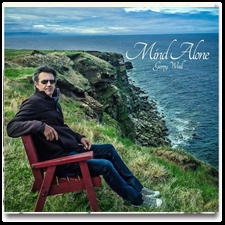
A writer will tell you (if they are being candid) that they never know whether their next work will be as good as their last - or really, if there will be a next work. I wasn't sure this album (or any other album) would happen after I finished World in 2010. I knew differently the day my best friend from public school (Grade 1 actually, and really ever since) showed up in Ottawa to spend the day recording 9 new songs in my attic. Just guitar and vocal straight off the floor. One takes. Thank you Rod!
I phoned Ken in Belleville to tell him that I might have another album in me. He said what took you so long? With some welcome good fortune, the crew from the World album was available. It may be that we were even all a bit pumped about going back into the studio to work on these songs.
Mike took the lead, after hearing the demos, to chart up and arrange the songs in what what I think is a most creative and appealing manner.
The difference between the demos and Mike's final arrangements is often vast - which strikes me as somewhat freaky since the melodies remained completely unaltered.
From the outset, we decided that we would use the band (Mike, Brian, Steve and Steve) on all parts. No guest soloists or additional instrumentalists were added. In the end, that helped glue the songs together into a unified work - an album.
We recorded the beds over three days in April. You can see a video taken by Victor Cooper of one song being recorded. Bits and pieces of overdubs and background vocals were done over the summer. Lori and Neil came in to do BGs, Mind Alone being the fourth album that I have worked with Lori and the third with Neil.
|
So a bit about the songs. The album opens with Steve O on the Wurlitzer, providing an intro for Sha La La. This is just a feel good way to start the journey. Mike's wonderful acoustic guitar licks on Pour a Little Wine transition to some equally wonderful electric guitar work on the third song (Lucky One). And then the duet with my favorite duetist - Ana Miura.
The tempo slows with Start With the Truth and features Steve O on piano. Mike also drapes some lovely textures over the mix and Lori soars in the chorus. Forty Days (the sixth song) is built around Brian's reggae-referenced drum track. Neil also sings a soulful interlude in the bridge/instrumental section. Very powerful.
Steve O contrasts the power of Forty Days with a reflective piano opening on Paid in Love. When the main song gets going, the band locks in on the joyful groove that Steve Lucas lays down. The title track, Mind Alone, is the second to last. While not featuring drums, it is really Brian's show as he leads us higher.
The album ends with Outlook. Check out the video.
Another beautiful electric guitar solo and fill-ins by Mike along with his equally beautiful acoustic guitar work. Brian layers in conga parts, Steve O drops in some Rhodes, Big Steve is on a roll and Neil and Lori lift up the chorus and bridge.
I know the concept of "the album" is dead. Everyone says so. But this is an album. Hope you hear it that way too.
|
|
BEAUTIFUL WORLD(2010)
 First off, the album title is really oversized. Who claims to know "the world" (besides Bill Bryson, and he actually does an exceptional job)? So the title shouldn't be taken in the omniscient sense - it's a very personal (and narrow) perspective on how we/me/you behave in our own respective worlds.
When I first realized that I had another album pretty much sketched out in my head, it was March 2010. I was submitting an application to play at the 2010 Ottawa Bluesfest and one of the questions asked was "have you just released or are you recording a new album?" It seemed prudent to respond that I was recording a new album.
I called Ken Harnden at Pinnacle Music Studios in Belleville - just talking with him got me jumpy to go. I put down a demo of 6 songs and by early May we had the band lined up and two days booked in June to do the bed tracks. June came. I was recording again.
Mike Francis (guitar) took on the job of charting the songs and he didn't complain or falter, even when I sent him another song the night before we started tracking. He also made some much-appreciated suggestions on chord substitutions and arrangements. And did I mention he is an incredible guitar player?
The album starts with BBFU World. Brian (Barlow) came up with the perfect groove after a first listen of the demo. Ken and Steve (O'Connor) both took me aside afterwards and said they thought the song was a keeper but would no doubt get a lot more exposure if I could find a different word than the F-bomb. To which I responded that I would be happy to switch but hadn't been able to come up with a more fitting word. I wasn't being completely honest with them; I knew there wasn't a better word.
|
On My Way features Mike in the extended outro. Something that sublime shouldn't be faded or cropped - I still get stoned when I listen to it. Ana (Miura) drove down to the studio one Saturday morning in September to duet on I Won't Let You Go. The car ride had lots of laughs, but not much rehearsing. Ana's vocal was, of course, perfect. Brian sets a vivid sonic mood with the percussive opening of Always on the Hunt while Donnie (Reed) checks in on violin. We had to coax Big Steve (Lucas) to drop a stand up bass solo into the middle of it and will be forever grateful that he agreed to give it a whirl.
The one song that took awhile to take form was Wonderfully Well. We had some great trash organ from SteveO, and some wicked, wicked vocals from Lori and Neil, but it took Donnie's spry fiddle to weld it together. On all the songs the vocal work of Neil and Lori was of the sweetest order (with Neil also at his creative best on the arrangements) but their work on Butterfly Attack, though brief, is especially magical.
A few other highlights - Brian overdubbing the first few bars of I Won't Let You Go when, after 30 seconds in, Mike (listening in the booth) asks if we should we tell him we got the opening - to which Ken replies "if he isn't stopping, I'm not stopping" and the rest, they say, is one historic great-groove drum track; SteveO browsing through Ken's "attic" accordion collection for just the right one on Burntroot; watching Big Steve catch a groove on 5 Star Work; and the always accommodating hospitality of Ken and Janet.
It's hard to pick musical influences on this album (so many, so many), but a nod should go to Mark Knopfler (who continues to write gems). Five albums in and I feel that I have found a sound. And that is the world as I know it.
|
|
EX PATRIOTS' DAY (2007)
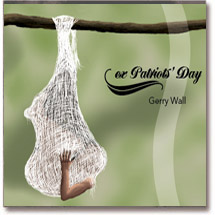 Album number 4. I decided to again work with Ken Harnden at his studio (Pinnacle Sound) and some of the musicians who had added so much to Returning Fire. Going in, my keys for this album were the use of a horn section (Wheeee!!), extended songs with multiple sections and of course the thematic device of relating the songs to considerations about "home" and being away from it. There are so many emotions and perspectives pertaining to "home" that I was left poking at it a bit here and there without ever reaching anything definitive. Big surprise there.
I also need to mention the contribution that Doug Johnson made with his Dobro and pedal steel playing. So tasty. The combination of Steve O'Connor and Doug is as good as it gets - maybe better (or is that like saying he/she gave it 110%?).
The first song (Cheticamp) features Doug's dobro playing. But no horns - they don't check in until the fourth song, Home by Sunday. |
The addition of Dave Draves on keyboard blips and smirgles in that song is pure delightful Dave. It is unusually long at over six minutes and honestly I took no offense at Andrew asking me why I didn't know how to end a song. Honest.
In what just might be a musical first, Anselana features Wurly, steel and saxophone. I think it was a single take on the beds. And then Are You Making Any Friends? One of my undeclared favorites, it features a brief duet with Lori and Steve doing an understated two-line synth thing that crosses over from high to low. He spent the best part of an afternoon trying to get 30 seconds of music the way he wanted it - a dedicated, brilliant performance. Just a quick word on Lost at Home . . . I combined my love of hockey, economics and lawsuits lyrically and I promise I won't ever do that again (although I really want to). The album finishes with Tiny Letters, featuring horns, Wurly, steel guitar and the dependable beauty of Neil Donell's background vocals.
Lots of other little bits that I haven't mentioned (Excusez moi!) but which are central to the sound and of course the mixing sessions with Ken ("can you make a megaphone?"). And that's ex Patriots' Day.
|
|
WINTER GRASS (2006)
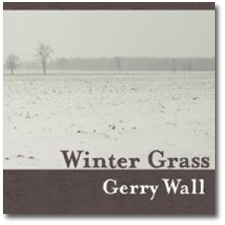
I have tried to develop a different musical sensibility for each album. This time I was looking to forego some polish,
leave some edges and let the musical journey wander a bit more. On Winter Grass, I had the good fortune to connect
with the extraordinary Dave Draves — producer, engineer, musician and all-around musical experimentalist.
Dave did me a favor by passing on my 4 song demo to Jeremy Gara, whose career was just taking off
(and is now in full propulsion) with The Arcade Fire.
|
Jeremy volunteered to sit in on drums and the three
of us laid down most of the bed tracks in a day or two. John Higney and Mike Shultz added some
tasty touches some time later. Ana Muira graced the album with her lovely vocals, singing a duet
and supplying lots of backgrounds. The background vocalists (Ana, Dave, Graham and an occasional me) had way too much fun.
It’s wrong, really, to enjoy yourself that much on a serious artistic endeavor.
Influences here? Well I guess the Jayhawks, Wilco, Mark Knopfler, Paul Kelly, J. J. Cale and Blue Rodeo come to mind although I’m not sure any song sounds a whole lot like those mentioned.
|
|
RETURNING FIRE (2004)
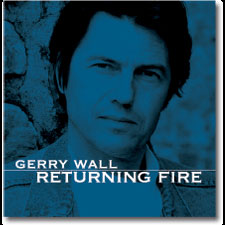
For Returning Fire, I hooked up with Jon Park-Wheeler, a gifted local guitarist and producer. We recorded the album at Pinnacle
Studio in the historic coastal town of Belleville. Ken Harnden did the engineering and also provided some terrific BGs
(along with the incredible Lori Dortono). We recorded the bed tracks in a day and a bit. The musicians were exceptional and
instead of doing everything, I just sang. When the electric grid went down across Eastern Canada and the U.S. in the early evening,
the guys found a way to come back the next day and finish up the last two songs. For those of us that stayed in town, we wiled away
the evening drinking single malts at the oh so prestigious Belleville Club. (Thanks Ken!)
Graham and I came back a few times to do the vocals, overdubs and mixing. It was energizing to
get away for this project and the studio setup and musicians were better than one could have reasonably hoped
for.
|
For the record (ha, ha), the amazing rhythm section was Steve O’Connor, Andrew Affleck and Kenny Post.
The gifted Ted Carson did the mastering. I also learned to love the tube microphone.
A product rep had left a Rode tube mic for trial and it had the multiple benefits of crystal
clarity while retaining warmth and making me sound better than I am. I think Ken bought the thing the next
week. Jeez, I even ended up buying one later.
As a note on authorship, the song “Don’t Tell My Mother” was actually written (mostly) by John McMullen. It was passed on to me by Edmond Chiasson who had recorded with John but had lost track of him. I made some additions and changes and recorded the song, but he has now heard the recording and put his blessing on it. John has a fine album out that has the pedigreed version of the song.
Returning Fire reflects many musical influences including (the well known) Steely Dan, James Taylor, Chet Baker, Lyle Lovett, Gerry Rafferty, Sade, Michael Franks and (the less well known) Dane Donahue, Jim Krueger and David Mead. Of course, I swipe liberally from so many others that RT has lots of references.
|
|
TOBERMORY (2000)
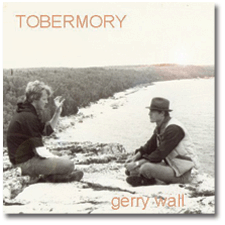 For those not from Ontario, Tobermory is located “at the tip of the Bruce Peninsula in Ontario, Canada —
a strip of land separating Lake Huron from Georgian Bay”. Although it’s a site targeted for tourists, check it out at http://www.tobermory.org/
For those not from Ontario, Tobermory is located “at the tip of the Bruce Peninsula in Ontario, Canada —
a strip of land separating Lake Huron from Georgian Bay”. Although it’s a site targeted for tourists, check it out at http://www.tobermory.org/
When I first moved to Ontario, Graham and friends took me here to camp. This is where the Blastoid was perfected. It is a truly mystical place. That’s Graham and me in Toby on the CD cover (with photo by the omnipresent Mr. Craig Ryan).
|
I recorded the album over a couple of years, starting on a TEAC 3340S and then finishing up on ADATs. I play most of the instruments with some welcome contributions from Craig, Graham, Bernie Haughian and Bob Libby (but please don’t blame them for the result).
I sent it out to several record companies and a few papers for review. I received many, many TBNT letters. These are also known as FOAD letters. The local weekly entertainment paper (the lowest resident on the journalism totem pole) even passed on reviewing it. I was bummed out. But as it turns out, the feeling passed
|
|
|
| |
|
